El Niño and the Thai latex supply: a historical view
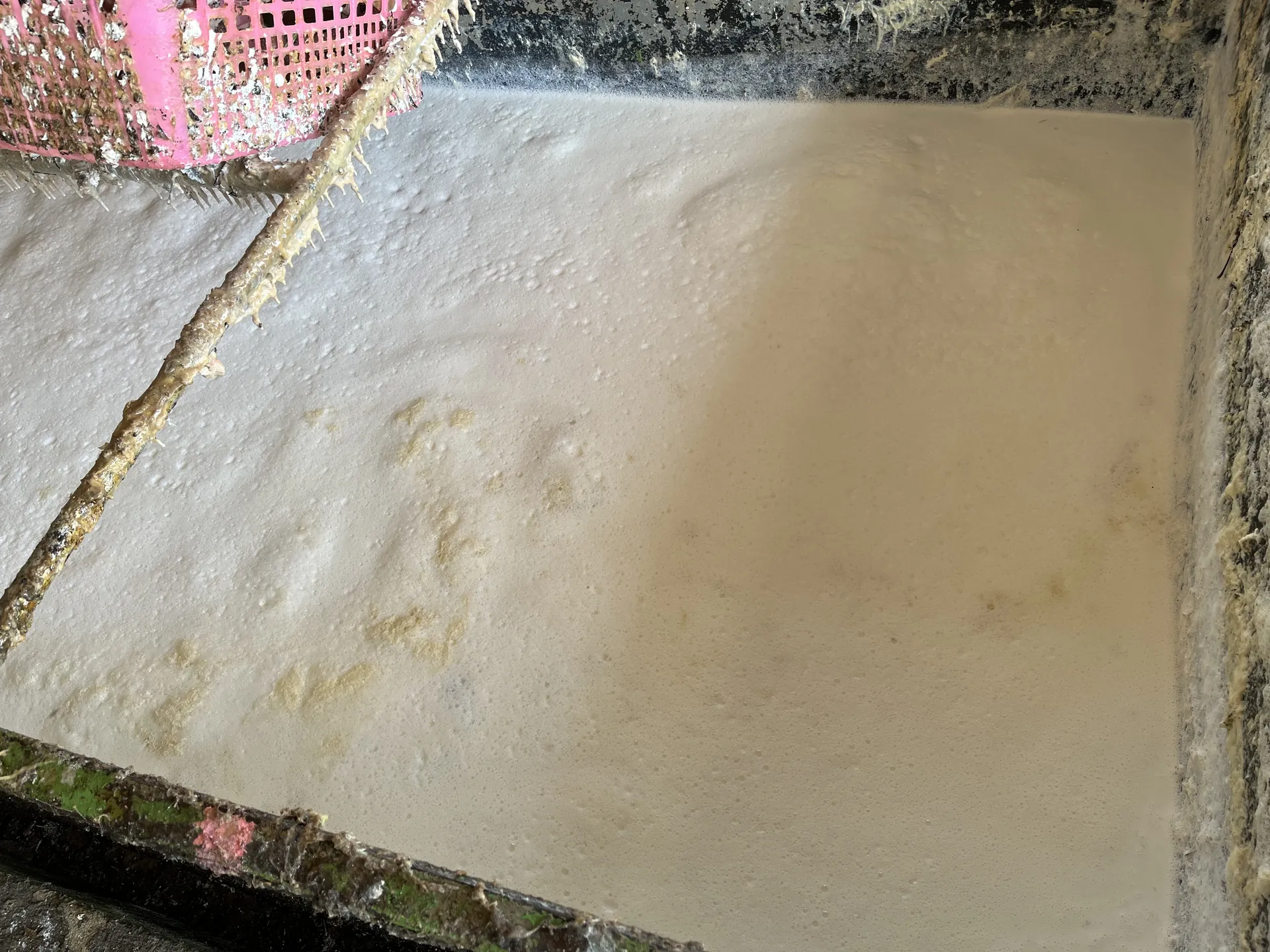
Rainfall sets the rhythm of a rubber plantation. Fewer tapping days mean less latex — and the historical record in Songkhla shows exactly how climate swings ripple into supply, usually with a lag of months.
Latex output is governed less by demand than by the weather over the plantation. Rainfall determines how many days a tree can be tapped; tapping days determine yield. It is a simple chain, and it is the reason a buyer planning a year’s supply should read the climate forecast alongside the price sheet — particularly with a strong El Niño forecast for late 2026 into 2027.
The historical record for Southern Thailand is unusually good on this point, and it carries a warning: the climate signal is real, but it rarely travels cleanly into the price. Reading it well means watching the physical indicators, not the headline number.
The mechanism: rainfall, tapping days, yield
A 33-year climate study from Prince of Songkla University, tracking yield against weather in Songkhla province from 1981 to 2013, isolates the chain precisely. In the 2011 flood year, plots managed just 87 tapping days — the fewest in the series — against 150 to 176 in normal years. Yield fell with them. When the model included tapping days lost to rain, its explanatory power rose sharply; without that variable, much of the variance was unaccounted for.
Both ends of the rainfall distribution hurt. Too little water and the trees enter stress: the agronomic minimum for uninterrupted latex flow is around 125 mm per month, and severe drought has cut yields by 36 to 61% across clones in comparable studies. Too much, and tapping simply stops — any day above roughly 34 mm of rain is effectively a lost tapping day, and a flooded plot cannot be reached at all.
There is a compounding effect that matters for quality, not just quantity. After a bad year, smallholders tend to over-tap to recover income — sometimes daily — which damages the tree through tapping panel dryness and borrows against future yield. The recovery is slower than the shock.
Why concentrated latex feels it first
Not all rubber products are equally exposed. Concentrated latex — Tat Win’s core product — is a fresh-flow material, made from field latex tapped that day or the day before. There is no warehouse buffer between the tree and the centrifuge. When flow stops, concentrate production falls within about 48 hours.
Block rubber and ribbed smoked sheet are more forgiving: they can be made from cup-lump and stored material, giving them a buffer of weeks. Concentrate also needs high dry-rubber content, and drought-stressed trees produce thinner, lower-DRC latex that is unsuitable for centrifuging without a yield penalty. The result is that climate shocks land on concentrated latex harder and earlier than the aggregate production figures suggest.
What 2015-16 actually did
The 2015-16 El Niño is the cleaner of the two recent super-strength events, and the most instructive. Its oceanic peak — an ONI of +2.6°C (NOAA, late 2015) — was the strongest in the record back to 1950. Thailand endured its worst drought in two decades, with major dams reported below 10% of capacity by early 2016.
On the headline, aggregate Thai natural rubber production fell only about 3.4%, from roughly 4.5 to 4.3 million tonnes. That number badly understates the damage, for two reasons. First, the 2015 figure was inflated by panic-tapping that borrowed forward against 2016. Second, the local and seasonal impact was severe: the Rubber Holder Co-operatives Federation of Thailand reported, via the Bangkok Post, that production fell roughly 50% year-on-year over the January-to-April 2016 window. In Phatthalung province, latex fell 60% and smoked sheet 70% — concentrated exactly in the wintering and post-wintering months that define a year’s concentrate availability.
The lag is the lesson
Here is the part buyers most often get wrong. The price did not move with the drought.
The price did not move with the drought. SICOM RSS3 hit its cycle low in January 2016 — at the very moment the climate signal peaked — because the market was pricing a $26 oil collapse and weak Chinese tyre demand, not the rubber belt. The rally came later: an 82% climb from June 2016 to February 2017, roughly thirteen months after peak drought, once export-restraint policy, recovering oil, and catastrophic December 2016 floods arrived together.
That thirteen-month lag is the single most useful fact in the record. A strong El Niño’s effect on the price you pay may not appear until well over a year after the dry spell — by which point the procurement decisions that mattered have already been made.
The 1997-98 event reinforces the caution from the other direction: a textbook super El Niño that left Thai output rising, because the Asian Financial Crisis and a collapsing baht overwhelmed the climate signal entirely. The lesson across both is not “El Niño means higher prices.” It is that climate is one variable interacting with currency, demand, and policy — and the signal is almost always masked at the headline.
What this means for a buyer
If the forecast strong El Niño materialises, the historical record suggests three things. Expect the physical impact to fall hardest on concentrated latex, and earliest — within the wintering window rather than spread across the year. Expect the price to lag the physical shortage, possibly by a year or more, which makes the quiet period before the rally the time to secure supply. And read the physical indicators — tapping days, DRC trend, reservoir levels, regional rainfall — rather than the futures benchmark, which will be busy pricing something else.
A supplier with a broad, well-documented farmer network across varied micro-climates is, in this light, not a sustainability nicety but a supply hedge. The value of that network compounds precisely in the years the weather turns.
Sources
- Sdoodee, S. & Somboonsuke, B. (2013) — The Impact of Global Warming on Rubber Production in Songkhla Province (Phase II), Prince of Songkla University (33-year climate record, 1981-2013; tapping-day and yield data).
- Rubber Holder Co-operatives Federation of Thailand, via Bangkok Post (29 April 2016) — ~50% year-on-year latex fall, Jan-Apr 2016; Phatthalung latex -60%, smoked sheet -70%.
- NOAA Climate Prediction Center — Oceanic Niño Index records; the 2015-16 event peaked at an ONI of +2.6°C, the strongest since 1950.
- U.S. Bureau of Labor Statistics — natural-rubber price index rose 43.6% from November 2016 to February 2017, documenting the rally after the early-2016 seven-year low.
- FAO — Rubber Cultivation Guide (agronomic rainfall thresholds: ~125 mm/month optimum, 34 mm/day tapping disruption). fao.org
Analysis prepared from Tat Win’s internal research record. Historical market data is indicative and not a forecast of future prices.
A research question we can help with?
- Business enquiries
- followup@tatwin.com
- Address
- Tat Win Company Limited
574/1 Moo 5, Pang-La, Sadao
Songkhla 90170, Thailand - Phone (Thailand)
- 074 260 567089 870 8494