Sustainability · 10 June 2026
Certified is scarce: the economics of FSC rubber in Thailand
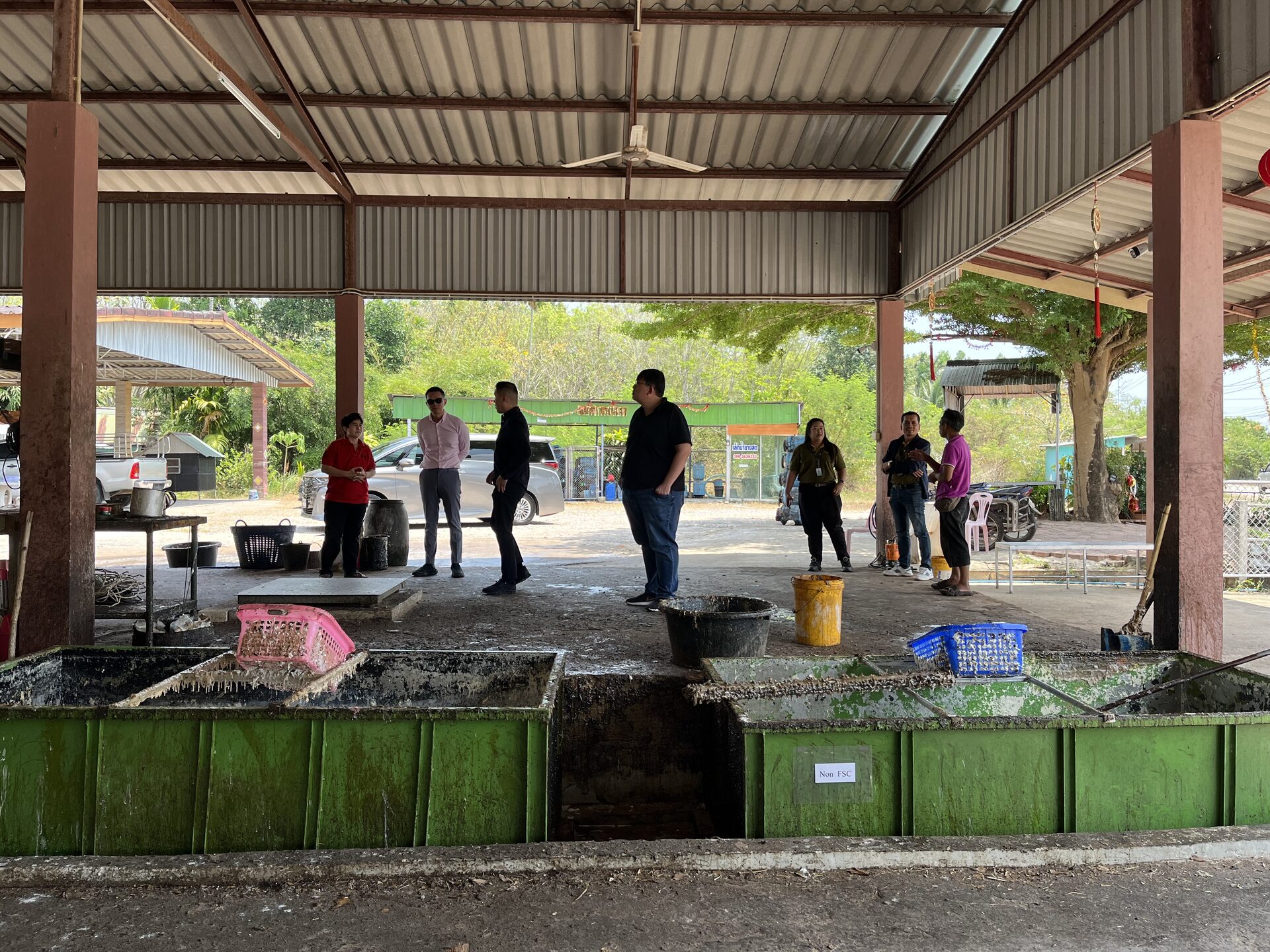
Fewer than one in two hundred hectares of Thai rubber is FSC-certified. As regulation turns certification from a nice-to-have into a condition of sale, that scarcity is what gives certified latex a premium that holds.
Most discussion of certified rubber focuses on the certificate — what FSC requires, what it audits, what it proves. The more useful lens for a buyer is the supply curve behind it. Certification is valuable not mainly because of what the label says, but because so little material carries it. Scarcity, not virtue, is what makes a premium durable — and certified rubber in Thailand is genuinely scarce.
Thailand has more than 1.6 million hectares of rubber under cultivation. Of that, roughly 8,000 hectares are FSC-certified. That is well under one half of one percent of the national crop — fewer than one hectare in two hundred.
It is worth sitting with how small that is. Thailand supplies the majority of the world’s latex concentrate. The certified slice of that supply is a rounding error against the whole. And among the major NRL concentrate producers — the large, vertically integrated Thai conglomerates — none has publicly confirmed FSC Chain of Custody certification. Certified concentrate is not merely a minority of supply; at the producer level it is close to a niche.
Scarcity of this kind does not respond to a price signal the way ordinary supply does, because you cannot simply certify more material on demand. Bringing a new smallholder into a certified chain requires Forest Management verification, polygon mapping, responsible-recruitment screening, and worker-rights training before a single kilogramme qualifies. It is deliberate, documented, and slow — which is precisely why the certified pool stays small even when the premium is visible.
In a normal commodity, a premium invites entry until it competes away. Certified rubber resists that logic on both sides. Demand is rising structurally — the EU Deforestation Regulation turns documented, deforestation-free sourcing from a preference into a condition of market access for large and medium operators from 30 December 2026. Supply, meanwhile, cannot expand quickly for the onboarding reasons above. Rising demand against a pool that cannot scale is the textbook setup for a premium that persists rather than erodes.
The market already prices this. The Rubber Authority of Thailand’s governor has stated that FSC-compliant rubber can command premiums of up to 40% over non-certified material at the raw-rubber level. That figure compresses as it moves through the value chain — by the time field latex is centrifuged into concentrate, the certified premium narrows into the low double digits — but it remains a real, measurable spread, and it is most pronounced exactly for the FSC-plus-EUDR specification that European buyers increasingly require.
The compression is itself worth understanding. A premium that survives the dilution of processing is one resting on genuine scarcity rather than on a marketing claim; if it were the latter, it would not show up in concentrate pricing at all.
A procurement buyer and a sustainability buyer look at the same number and see different things, and both are right.
For procurement, the scarcity is a sourcing risk. If EUDR makes certified, plot-traceable material a condition of selling into the EU, and certified supply is a fraction of a percent of the crop, then access — not price — becomes the binding constraint. The buyers who secure relationships with certified producers before the deadline are buying availability; those who wait are competing for a pool that does not grow on command. In a market this tight, a certified supplier is less a premium option than a gatekeeper.
For the ESG or C-suite buyer, the same scarcity is a credibility signal. The difficulty of certification is the point: a supply chain that has done the Forest Management verification, the polygon mapping, and the worker-rights work has produced evidence, not assertions. In a category crowded with sustainability language, documented scarcity is the rare claim that cannot be manufactured cheaply — which is exactly why it is worth paying for.
The honest framing for a buyer is that the FSC premium is not a tax on doing the right thing.
The FSC premium is not a tax on doing the right thing. It is the price of a genuinely constrained resource arriving at the moment demand for it becomes non-optional. Treating certification as an optional sustainability upgrade, to be added later if budget allows, misreads the supply curve: the material may simply not be available to add later.
Tat Win sits inside that scarce pool. It holds FSC Chain of Custody certification (FSC™ C151320) over a documented, traceable supply chain in Southern Thailand — the combination of concentrate specialisation, certification, and an in-house research lab that defines a narrow, high-value segment of the market. As the certified pool stays small and regulated demand grows into it, that position is less about commanding a premium and more about being one of the few suppliers who can answer the question European buyers are about to be required to ask.
Tat Win holds FSC™ Chain of Custody certification (FSC™ C151320). Premium figures are indicative and drawn from public RAOT statements and Tat Win’s internal analysis; this is general analysis, not pricing advice.